
Book Writing & Publishing
{The Blog}
Ep 185: Write a Novel in 100 Days with Kim Purcell
After six nonfiction books, I've been writing my first novel for longer than I care to put in print, and everyone who listens to my podcast is aware of this because I will not shut up about it.
So when Kim Purcell reached out about her new book, Write a Novel in 100 Days, the timing felt less like a coincidence and more like the universe taking an interest in my personal business.
Kim is the author of Trafficked and This Is Not a Love Letter. She has an MFA. She has been teaching novel writing to kids, teens, and adults for decades, and she has read essentially every craft guide in existence. Her new book comes out September 22, 2026 from Penguin Random House with a foreword by Donald Maass.
It also took her longer to write than three of her novels combined, which I found deeply comforting and a little bit vindicating.
You're Probably Not Stuck
Kim teaches every age group, which gives her a view of this that most of us don't have. And she says there's a shift she can see com...
Ep 184: How a Weekly Substack Post Turned Into a Book Deal, with Katie Clapham
Do You Need a Big Author Platform to Get a Book Deal?
Katie Clapham had about 2,000 Substack subscribers when publishers in both the UK and the US said yes to her book.
That number is likely smaller than almost every number you've been told you need. It's smaller than the follower count people quote at writing conferences. And it's smaller than what most authors assume they have to hit before they're allowed to consider themselves "real writers."
Katie runs an independent bookshop called Storytellers, Inc. on the northwest coast of England with her mom. She also writes a weekly Substack titled "Receipt from the Bookshop." And her first book for adults, Receipts from the Bookshop, came out in the UK in June 2026 and lands in the US on September 8, 2026 from William Morrow.
She started that Substack with very few subscribers and no plan whatsoever. Here's how the rest of it happened, and what it means for you, whether you're going the traditional route or self-publishing.
The ...
Ep 183: The Book Editing Process, Explained (with Allison Buehner)
Most first-time authors don't hire the wrong editor. They hire the right editor at the wrong time, which costs the same amount of money and gets them a fraction of the value.
I've been editing nonfiction and memoir for two decades, and I hear a version of this every few weeks. Someone finishes a draft on a Tuesday and wants to book a proofreader for the following month.
Fiction editor Allison Buehner of Golden Editorial gets the same email, constantly, from self-publishing authors who assume proofreading is all editing is. We talked about it at length on this recent episode of Write the Damn Book Already, and I want to lay the whole thing out here, because nobody hands you a map of this when you decide to publish a book.
The four types of book editing, in the order they happen
Here's the short version, and then we'll go deeper on each one.
Developmental editing looks at the book as a whole. Structure, pacing, argument, character, whether the thing delivers what it promises....
Ep 182: What a Real Writing Career Looks Like, According to Laurie Notaro
Laurie Notaro has landed on the New York Times bestseller list something like eight times. (She isn't sure of the exact number.) She's also not sure how many books she's written, which I found so delightful I nearly came out of my chair. She drives a 2008 Mini Cooper, lives in a 1,500 square foot house, and has earned out on exactly one book.
Laurie came on the podcast to talk about I've Got a New Complaint, her new essay collection out September 8 from Little A, with a title borrowed from a Nirvana lyric. We did talk about it. We also talked about getting fired, getting dropped by her agent over email, and being told no by nearly everyone for thirty years.
The math on a writing career is not what anyone tells you There's a story floating around out there where you land the book deal and then you're set. Royalties roll in. You buy a house with a library in it. You become insufferable at parties. Laurie's response to that: "Hardly anyone ever earns out." She said it plainly, as s...
Ep 181: Joyce Maynard on Storytelling, Permission, and Who Gets to Tell the Truth
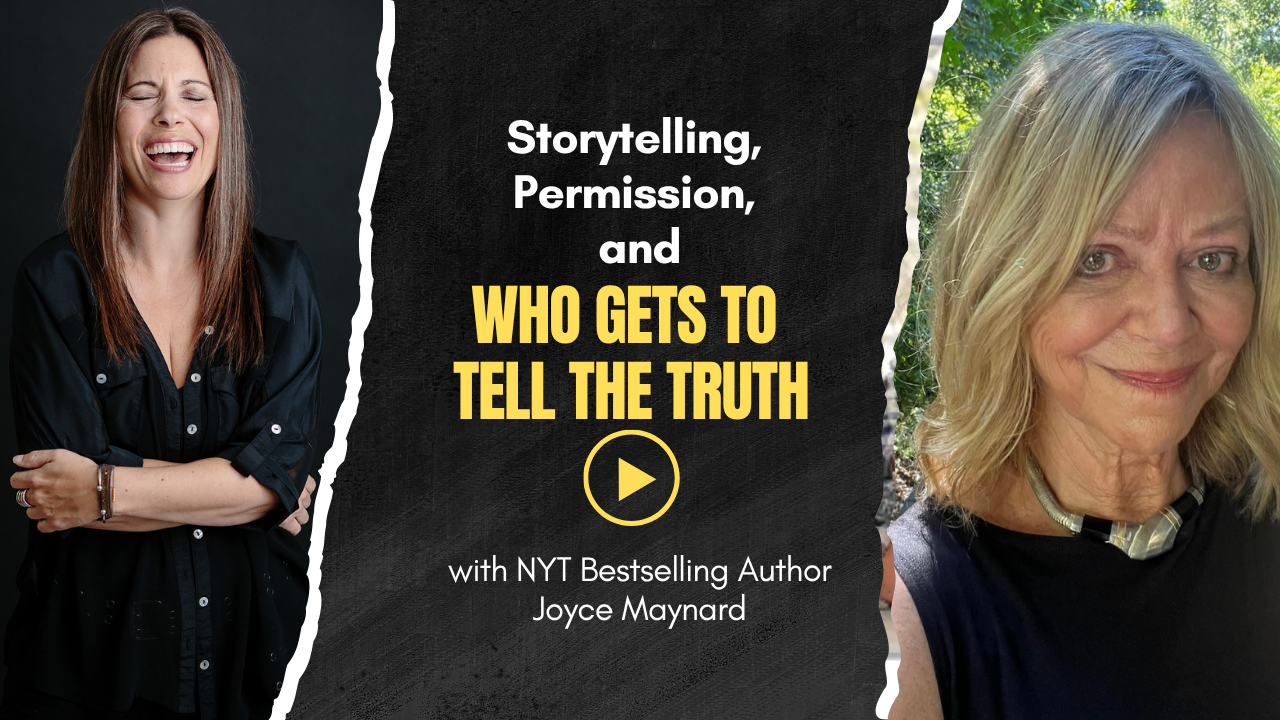
If you are trying to figure out how to write a memoir and you keep stalling out on one specific worry, that being what your mother is going to say, you are in extremely good company. Joyce Maynard has hosted memoir retreats for more than 25 years and well over a thousand women, and she says the same question comes up every single time.
Men do not ask it. Women ask it constantly.
How do I tell an honest story about my life without hurting the people in it?
I got to sit down with Joyce for the Write the Damn Book Already podcast a few days after her fourteenth novel, In Wonderland, came out. I had one goal going in, which was to not ask her a single question she has already answered a thousand times. We were in Guatemala by minute four, so I think it worked.
Here is what came out of it, and why it matters if you are a first-time author sitting on a story you are not sure you have permission to tell.
Who is Joyce Maynard?
Short version for anyone who is new to her work. Joyce ...
Ep 180: What First-Time Authors Need to Hear Before Querying an Agent (with Eli McCann)
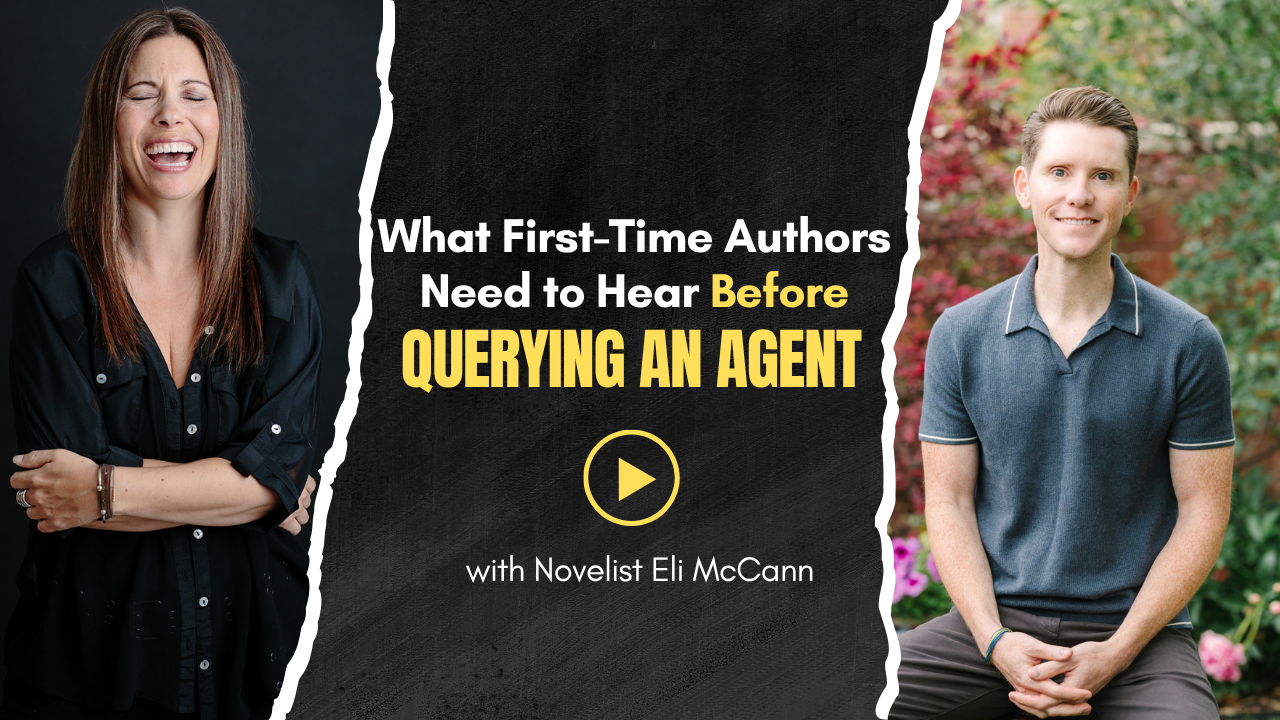
If you're a first-time author staring down the query trenches or wondering whether you even have the right to call yourself a "real" writer yet, this episode is for you.
My guest, Eli McCann, wrote a debut novel titled Stitched based on stories about his mom's drama-heavy, quilting group (I think of it like the Real Knitters of Salt Lake City), and the story behind how it got made is a massive testament to the power of refusing to shrink yourself to fit someone else's idea of marketable.
Eli is a lawyer, a longtime humor columnist for the Salt Lake Tribune, and a writer who built a massive storytelling following on TikTok and Instagram a full year before his book ever came out—on purpose. But also, and this is one of the (many) things I admire about him, he knows it's not all about the numbers.
We talked about why he built the audience in advance (and how), what happened when publishers told him his book would be a hard sell because it centers older women, and why he refused t...
Ep 179: Meg Mitchell Moore on Messy First Drafts and Why Nobody Has Publishing Figured Out
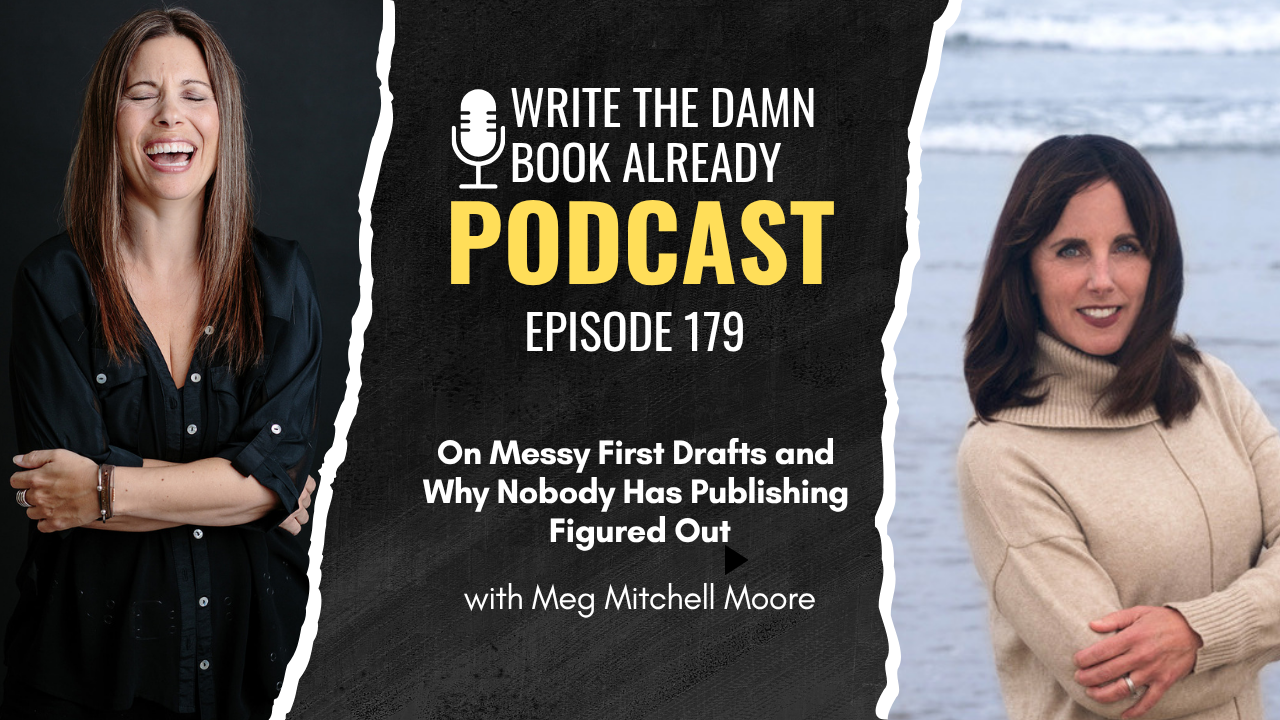
Ten books in, Meg Mitchell Moore still doesn't know what her plot is going to be when she starts writing.
Meg Mitchell Moo
Ten books in, Meg Mitchell Moore still doesn't know what her plot is going to be when she starts writing.
Meg Mitchell Moore has published ten novels. And she still starts most of them with no idea what's going to happen. No outline, no plot, sometimes not even a reason her characters are in the room together. She figures it out as she goes, often with her agent's or editor's help.
If that sounds like it shouldn't work, that's kind of the point of this conversation. It does work. It's worked ten times! And I love how honest Meg is about the fact that her first drafts are a mess and revisions are where it all comes together.
We also get into the parts of book publishing that show up in very few highlight reels. Meg talks about learning, book by book, how much of a "big author moment" (the 10-city tour, the massive publisher push) is actually the auth...
Ep 178: What If You Already Found Yourself? Angela Brown on Fiction, Fear, and Saying No
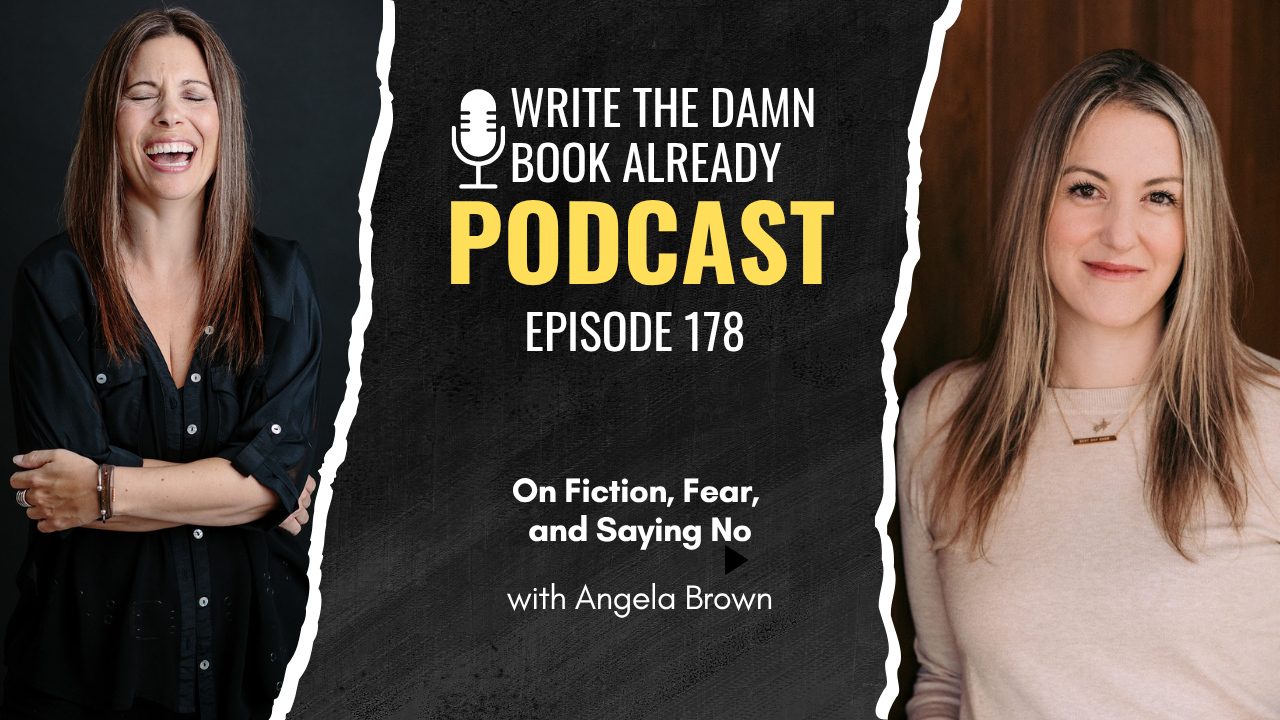
This episode quickly got personal because I'm elbow-deep in my first novel after six nonfiction books, and Angela Brown writes the kind of fiction that makes one feel quite seen.
Angela is the author of Olivia Strauss Is Running Out of Time, Some Other Time, and her newest, Ways to Find Yourself. And I will fully admit I read the prologue the night before we recorded and had a moment. Not a cute moment. A "why am I like this" moment. So we start there, obviously.
But this conversation goes way past my feelings about her book (though we do talk about her characters, her sneaky habit of naming them after real people in her life, and the "what if" questions that kick off each of her novels). We get into the actual mess of writing fiction: how she doesn't always know where a story is headed when she starts it, the time an entire book arrived in the shower (why does all our best thinking happen there?) and she wouldn't leave her desk for two hours because she was afraid it would v...
Ep 177: There Are No Rules (Except the Oxford Comma) -- with Eric Garcia
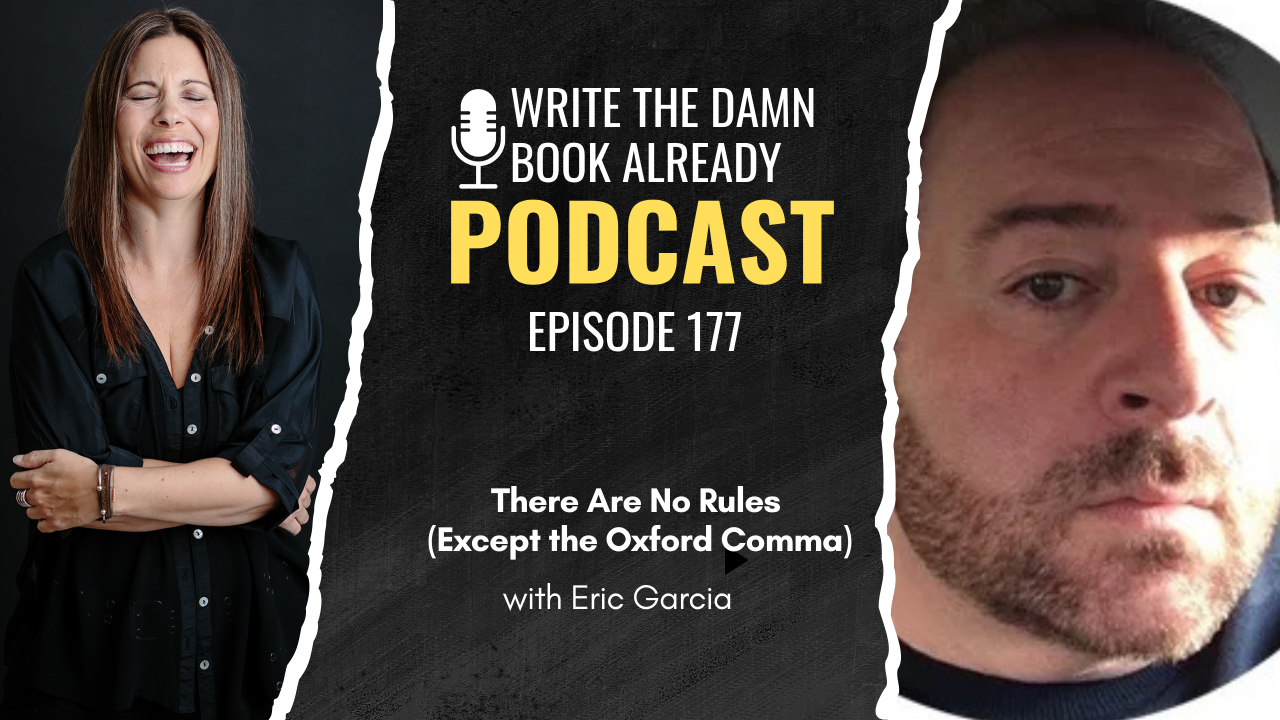
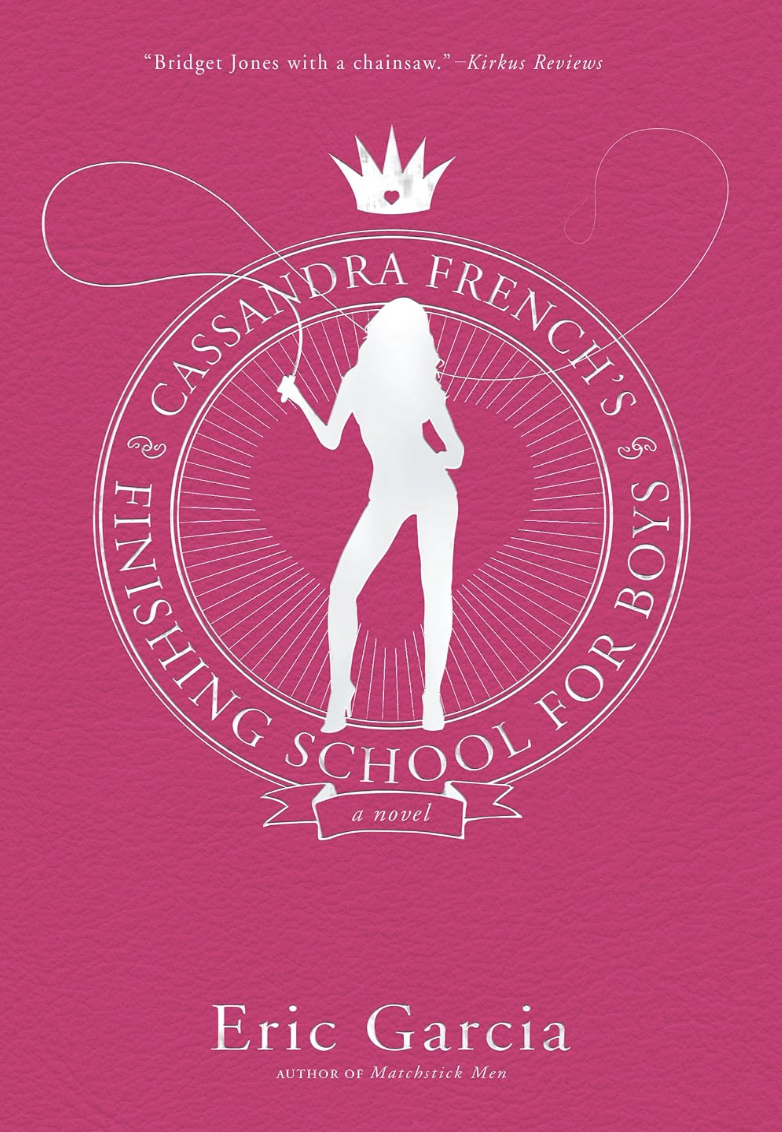
In this episode, novelist and screenwriter Eric Garcia (Matchstick Men, Kaleidoscope) shares book writing tips on ditching the rules, writing a novel by accident, and what's really changed in publishing.
He's published six books (so far), three of which he's sold to Hollywood. And somehow, he managed to write his latest novel entirely by accident. He set out to write a short story. Then it got longer. Then it was a novella. Then it was 80,000 words and he had to admit he'd written a whole book, mostly at night, while still juggling film and TV work.
We also talk about what's changed in publishing since his Random House days (Hint: mid-list used to mean stable; now everyone's terrified of it), why chasing trends is a losing game when a book takes years to reach shelves, and why there are no rules for how long a chapter should be, except the one that matters: Don't make me want to stop reading.
ABOUT ERIC GARCIA
Instagram: @ericgarciathewriter
CLICK HERE TO HELP YOUR ...
Ep 176: Writing and Publishing Children's Books (with Erin Thorburn)
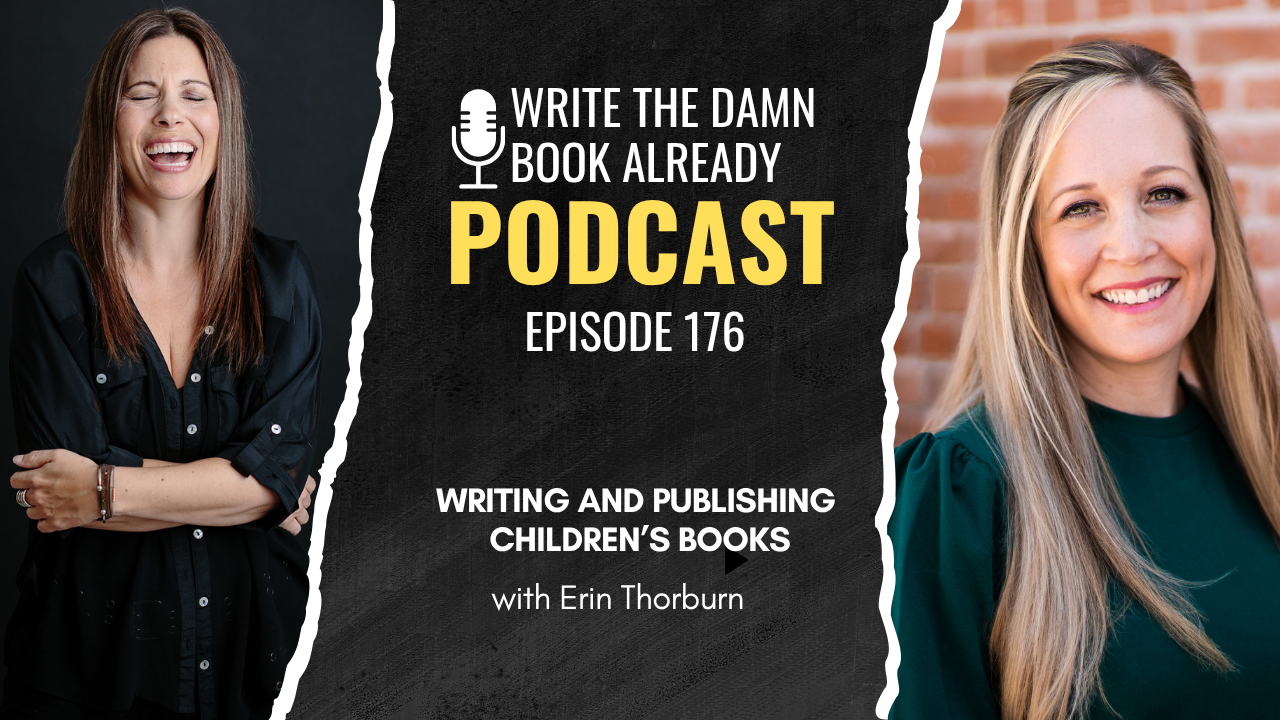
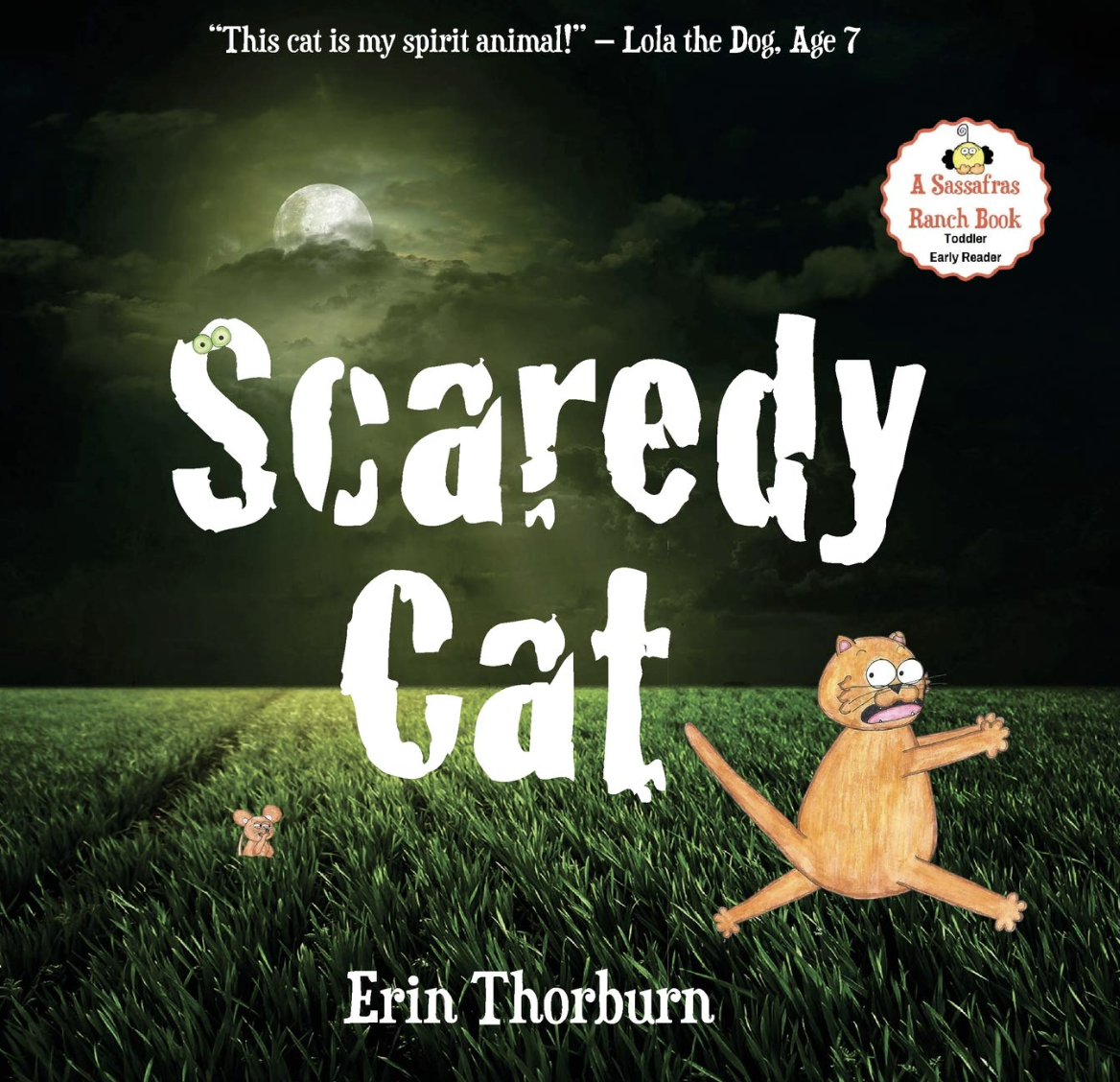
In this episode, I chat with children's book author and illustrator Erin Thorburn. (She also happens to be my best friend.) We wax not so poetic on book writing, publishing, marketing children's books (her lane, not mine), and navigating the creative industry with humor and properly set expectations.
CONVERSATION HIGHLIGHTS:
- Challenges of publishing (and marketing) children's books
- Marketing strategies for authors
- The myths (and, of course, truths) of our experiences building both confidence and community
- How to navigate industry egos and rejection without making it mean you should quit (or just plain quitting)
CONNECT WITH ERIN THORBURN
Website: thebestofthesouthwest.com
Instagram: @erinofthesouthwest
CLICK HERE to download the Self-Publishing Starter Kit (it's free!)
Ready to Write the Damn Book Already?
Get the first draft of your nonfiction or memoir written in 33 days!
...even if you don't have a cabin in the wilderness, 4 uninterrupted hours a day to write, or confidence that you're a "real" writer.

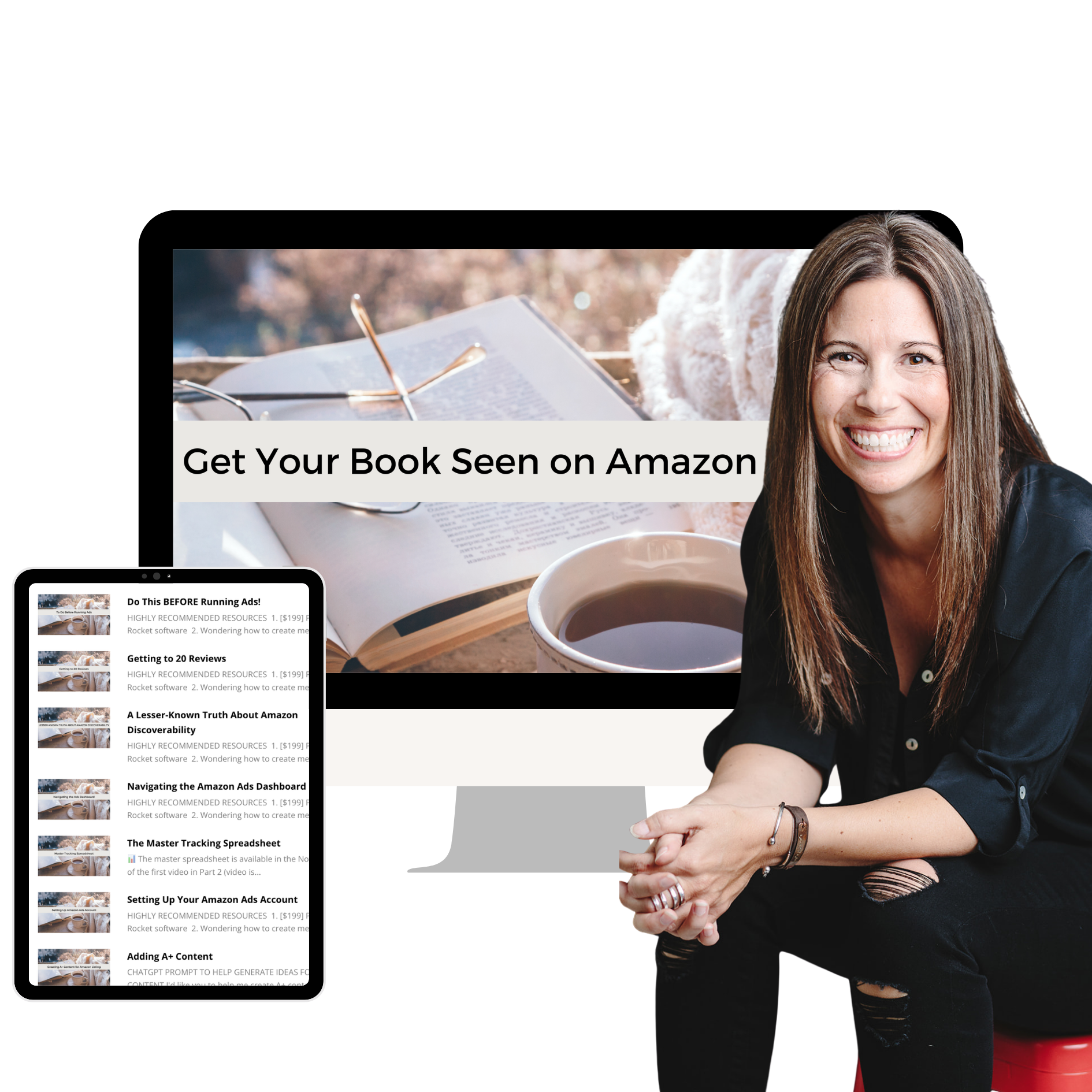
Amazon Ads for Indie Authors!
Learn how to run Amazon ads that actually work—even if you’ve never touched an ad platform in your life.

Want all my best author email templates?
From communicating with your launch team to building long-term relationships with readers, these templates take all the guesswork out of writing emails that turn email subscribers into loyal readers!

Need Coaching, Accountability & Community?
The Book Writers Collective provides the coaching, support, and writers' community you need to bring your book to life!

SELF-PUBLISHING STARTER KIT
Discover the exact steps to focus on (and mistakes to avoid) so you can self-publish an incredible book that's indistinguishable in quality from a New York Times bestseller.
Recent Posts
