
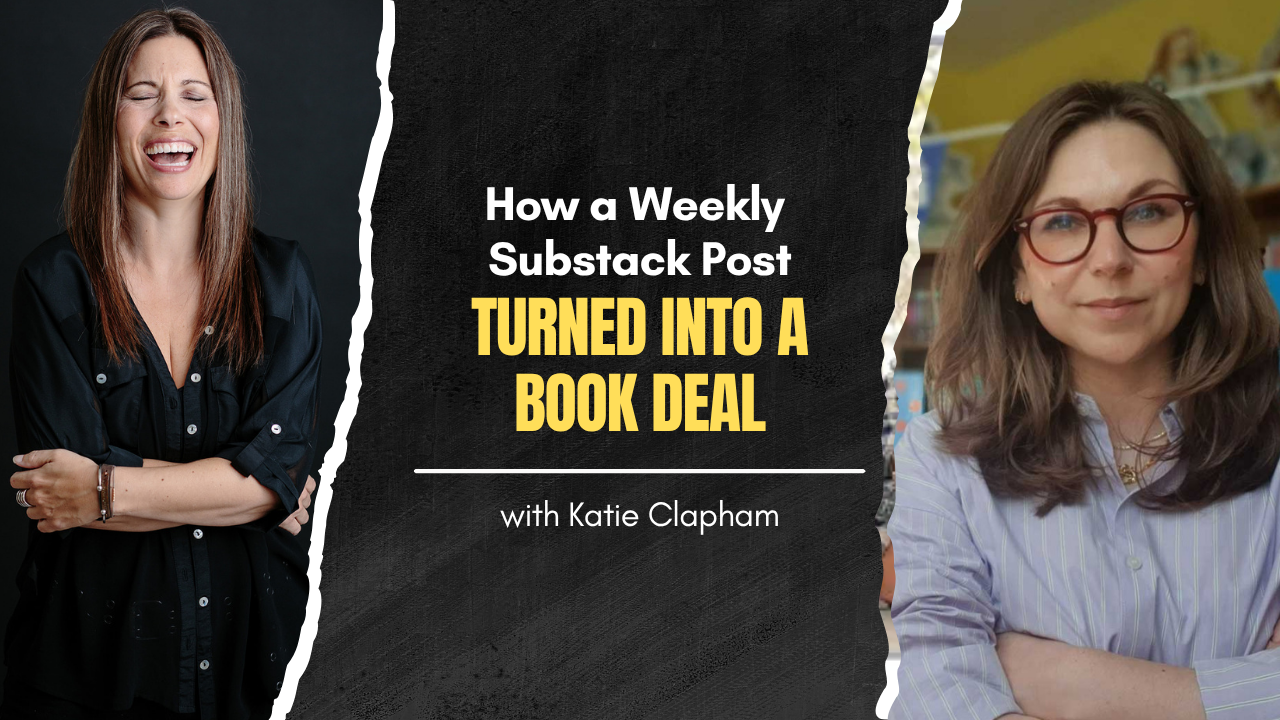
Ep 184: How a Weekly Substack Post Turned Into a Book Deal, with Katie Clapham
Do You Need a Big Author Platform to Get a Book Deal?
Katie Clapham had about 2,000 Substack subscribers when publishers in both the UK and the US said yes to her book.
That number is likely smaller than almost every number you've been told you need. It's smaller than the follower count people quote at writing conferences. And it's smaller than what most authors assume they have to hit before they're allowed to consider themselves "real writers."
Katie runs an independent bookshop called Storytellers, Inc. on the northwest coast of England with her mom. She also writes a weekly Substack titled "Receipt from the Bookshop." And her first book for adults, Receipts from the Bookshop, came out in the UK in June 2026 and lands in the US on September 8, 2026 from William Morrow.
She started that Substack with very few subscribers and no plan whatsoever. Here's how the rest of it happened, and what it means for you, whether you're going the traditional route or self-publishing.
The author platform came after the book deal
When Katie went out on submission and got offers from publishers, her subscriber list was in the low 2,000s. She wasn't bringing an audience to the table or capitalizing on a viral moment. In her words, none of that was what she brought to the deal.
Today, nearly 12,000 people read her weekly post now. And all of that growth happened after she got the book deal.
So when someone tells you that you have to have an enormous following before anyone will take a chance on your book, what they usually mean is that a following helps. It does. But it's not the toll booth people make it sound like, and treating it as one has stalled more manuscripts than I can count.
How Receipt from the Bookshop actually started
Katie joined Substack in November 2022 for the least strategic reason imaginable. Twitter had become a place she didn't recognize, everyone she talked books with had scattered, and she wanted somewhere to put her reviews and her book chat.
She posted every week. A few months in, she turned on paid subscriptions, mostly as an experiment because she was writing long book criticism pieces anyway and wasn't going to pitch them anywhere.
Then came the following July, and a week where she had nothing ready to publish.
She was working her usual shift at the shop. It was quiet. She opened a draft, started writing down the day as it unfolded, the customers and the questions and the things she overheard, and she cashed up the till at the end of the day and hit send. She named it Receipt from the Bookshop and numbered it one, on the off chance she'd do it again.
About 250 people read it. They said they liked it. So she did it the next week, and the week after that.
Katie says she's glad it happened that way, because if she'd planned it in advance, she would have overthought it into oblivion. Instead the format came out of the doing.
I bring this up constantly with authors who are mid-manuscript and stuck: The thing you're waiting to feel ready for is usually the thing that only makes sense once you're already inside it.
What goes in a nonfiction book proposal when you don't have a finished book
Katie had published children's books and a young teen novel. Each of those required a finished manuscript before anyone would consider it. The pitch for Receipts from the Bookshop was the first she'd ever written.
For an adult nonfiction book, she didn't have to hand over the whole thing. What she sent was:
- Sample pages showing what the format would look like on the page
- A short introduction that was a few pages long, giving a feel for her voice and what the project was
- Roughly two months of work getting all of it to sound right
Her agent gave her other nonfiction proposals to study, though they were odd comparisons, cookery books and the like. The point of studying them wasn't the subject matter. It was seeing how much of the job is demonstrating your voice rather than describing it.
Remember: Your job is not to write an essay explaining what the book will be. Your job is to make somebody feel what it's like to read it.
If you're self-publishing, this still applies, just with a different audience for the pitch. Your sample pages have to do the same work on a reader browsing your "Look Inside" that they'd do on an acquisitions editor.
Should you build a Substack, an email list, or a website?
Katie doesn't have a website beyond her Substack. She doesn't have a professional Twitter or Bluesky either. Substack is her entire online presence, and no publisher on either side of the Atlantic has ever asked her for anything more.
She's said plainly that she's not a technical person. She isn't going to build a site or go into the back end of anything, and she doesn't want to. People are there for her words, so that's what she offers.
So no, there isn't one right setup. There's the one you'll actually maintain. If a weekly newsletter is the only thing you can sustain, that beats a beautiful website you update twice a year and a newsletter you abandon in March.
She's also been clear about where she draws lines on the platform. When Substack rolled out an AI detection scan across everyone's posts, she disabled it on hers. She's avoiding AI wherever she can in her own writing, and she isn't interested in proving a negative to anybody.
How to handle the pressure of paid subscribers
This comes up every time an author considers turning on the paid version of Substack, so I asked her about it directly: How do you keep the feeling that you "owe" your readers something that makes their subscription "worth it" from taking over?
Her subscription is set to the lowest price the platform allows, because she doesn't want to feel beholden to an expensive promise. She publishes twice a week, and the free post is the receipt, which is her most popular work. The paid post is the bonus, a book review or a discussion.
Her read on it (pun intended) is that people are paying because they love the free thing and want to support the work. The extra is a thank-you rather than the product itself. That perspective does a lot of the lifting when it comes to her sanity, and I think it would do the same for many authors concerned that they've priced themselves into a corner.
Defining success for your book before it launches
Katie's teen novel is already out of print after just a few years. She's still proud of it, and readers wrote her moving things about it, but and it didn't sell enough to cover what the warehouse charged to store it. That's how the business works, which she acknowledges without any bitterness.
Which is why she went into this launch with her definition of "success" set in advance:
- Being published by an editor whose books she already admired as a bookseller
- Seeing the book in independent bookshops where she doesn't know the owner
- Reviews from readers who have no idea who she is
- Staying in print for a few years
- Library loans
- Earning enough that her publishers are glad they did it
- Translations, which genuinely thrill her
Every one of those is either fully or partly inside her control, or at least attached to something real. None of them is a number she'd have to white-knuckle her way toward.
She told me the only thing that really matters to her going forward is getting to keep doing this. And the fear she carried into launch wasn't about marketing at all. It was that this might be the part where she finds out the book isn't as good as she thinks it is.
If you too have felt that, you're in extremely good company. It's not a sign of anything more or less than this: You care about the work.
What this means for you
Katie's path was traditional, which I never hold up as "better" or "worse" than indie or self-publishing. Every paradigm works for someone and some books. Plus, by now you no doubt know how I feel about self-publishing. It's a legitimate, flexible, wonderful option when you do it properly.
What transfers regardless of your path is the sequence. She wrote consistently for a long stretch with no plan and no audience. The format arrived by accident, on a slow Thursday, in the middle of doing the thing. The readers came after that. The deal came after that. The 12,000 Substack subscribers came after all of it.
So if you've been stalled waiting to grow an audience before you write, or waiting to feel qualified before you publish, maybe it's time to consider flipping the order? Just a thought. ;)
ABOUT KATIE CLAPHAM
Subscribe to Katie's Substack here
Want to Stay in the Know?
Sign up to receive the latest book industry news and updates!
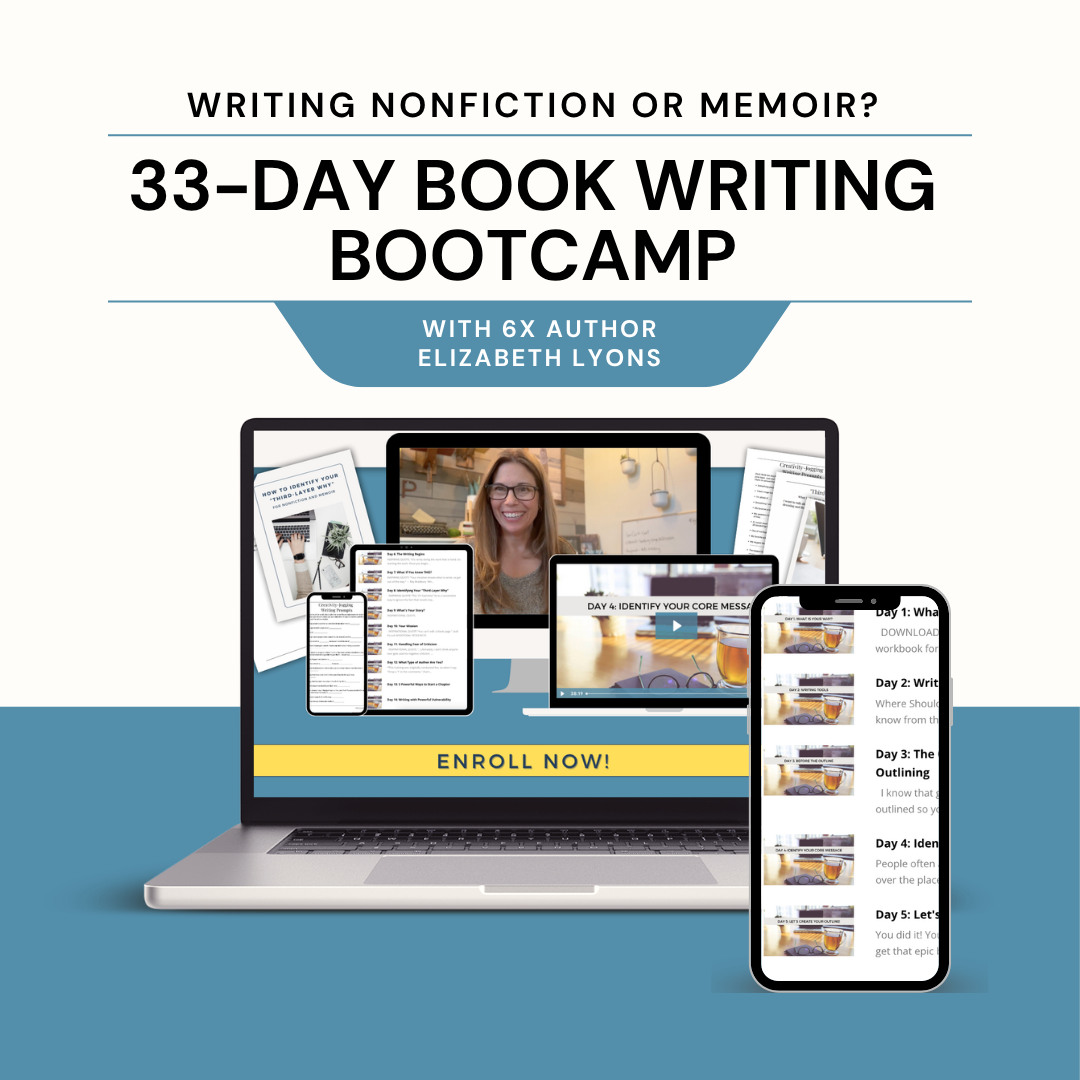
Ready to Write the Damn Book Already?
Get the first draft of your nonfiction or memoir written in 33 days!
...even if you don't have a cabin in the wilderness, 4 uninterrupted hours a day to write, or confidence that you're a "real" writer.

Amazon Ads for Indie Authors!
Learn how to run Amazon ads that actually work—even if you’ve never touched an ad platform in your life.

Want all my best author email templates?
From communicating with your launch team to building long-term relationships with readers, these templates take all the guesswork out of writing emails that turn email subscribers into loyal readers!

Need Coaching, Accountability & Community?
The Book Writers Collective provides the coaching, support, and writers' community you need to bring your book to life!

SELF-PUBLISHING STARTER KIT
Discover the exact steps to focus on (and mistakes to avoid) so you can self-publish an incredible book that's indistinguishable in quality from a New York Times bestseller.
