
Ep 185: Write a Novel in 100 Days with Kim Purcell
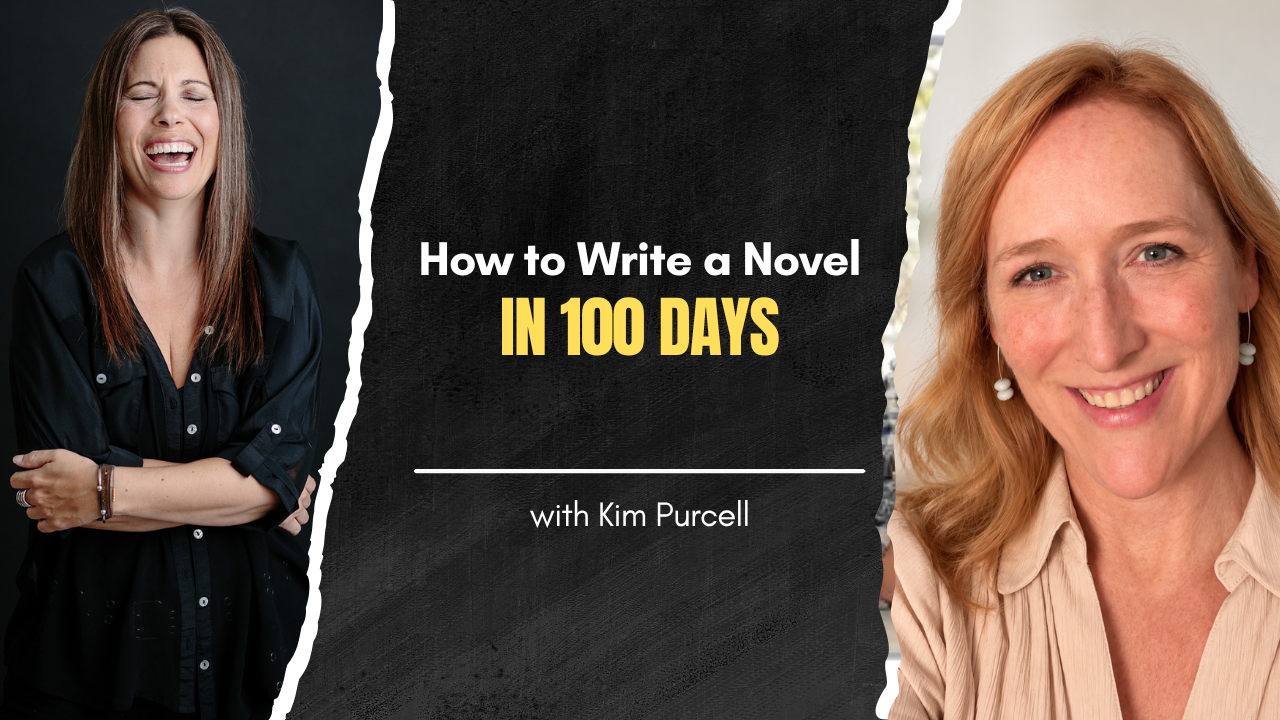
After six nonfiction books, I've been writing my first novel for longer than I care to put in print, and everyone who listens to my podcast is aware of this because I will not shut up about it.
So when Kim Purcell reached out about her new book, Write a Novel in 100 Days, the timing felt less like a coincidence and more like the universe taking an interest in my personal business.
Kim is the author of Trafficked and This Is Not a Love Letter. She has an MFA. She has been teaching novel writing to kids, teens, and adults for decades, and she has read essentially every craft guide in existence. Her new book comes out September 22, 2026 from Penguin Random House with a foreword by Donald Maass.
It also took her longer to write than three of her novels combined, which I found deeply comforting and a little bit vindicating.
You're Probably Not Stuck
Kim teaches every age group, which gives her a view of this that most of us don't have. And she says there's a shift she can see coming around age eleven: The writing doesn't get worse; the self-consciousness arrives.
Suddenly there's a kid who used to write with total abandon asking whether it's good, whether people will like it, whether they're acceptable. And then they say they're stuck. Kim's theory is that most of us collected creativity scars in middle school, largely because writing gets taught badly, and we carried them straight into adulthood. So now we sit down to draft and the first thing we think is that this has to be right on the first pass. Which leads somewhere entirely predictable: We avoid things that make us feel bad. Nobody voluntarily does a thing that reliably makes them feel like a failure! So we don't write, and we call it being stuck, when it's closer to flinching.
Does "100 Days" Mean 100 Days in a Row?
No. The 100 days are 100 days of writing. And they aren't necessarily consecutive days. If you can write twice a week, do two of the days that week. If you can manage one, do one.
I run a 33-Day Book Writing Bootcamp for nonfiction and memoir, and I have watched this exact thing happen over and over. Somebody gets sick, or their kid gets sick, or work explodes, and they miss five days. Then comes the spiral. They're supposed to be on day seventeen, they're on day twelve, and the sense of failure is heavy enough that a lot of them just stop.
The day number is an intentional sequence, not a deadline. You are on whatever day you're on.
Kim does suggest spending just 15 minutes a day on your book, which doesn't necessarily mean 15 minutes of writing. The goal is simply to keep your imagination in the game. Journal about a character. Think about your story on purpose.
One Skill a Day Instead of All of Them at Once
The reason Kim built the book as a daily guide is that her students kept telling her the same thing about craft books: They found them inspiring but they still had no idea what to do on Tuesday. The structure is scaffolded. You apply one skill per day rather than trying to have all several hundred of them present on the page from the first sentence. By the end you've built a toolbox, and then you go back and apply everything you now know to the beginning.
I asked Kim what belief she runs into most often that simply isn't true, and she was quick with her answer.
People wildly underestimate how much rewriting is coming, and specifically how much of it means starting a scene over from nothing.
Her claim (and I've tested it enough now to agree) is that rewriting a scene from scratch is roughly ten times faster than fiddling with the one you have. And the rewrite is always better, whereas you can absolutely make a scene worse with a series of small edits, which is a special kind of demoralizing.
When you rewrite, you already know the scene. You know the characters better than you did the first time. Things surface that never would have surfaced through editing, because editing keeps you in the part of your brain that evaluates rather than the part that invents. The resistance is understandable. Deleting seven thousand words feels like loss. But you don't lose them. You pull the arrow back so it flies further, and you'll cut the deadweight naturally on the way through.
Stop Fixing as You Go
More advice I'd be wise to heed: While you're drafting, move forward as fast as you can and resist repairing things behind you. You are very likely to cut scenes you haven't cut yet. Spend three weeks perfecting a scene that doesn't survive the draft and you've spent three weeks on nothing.
We often get too analytical in the middle of what should be a creative process, and those are genuinely different parts of the brain. Being editorial while you're drafting doesn't improve the draft. It just interrupts it.
What Even Pantsers Need to Plan
Kim is not anti-pantser. She's anti-going-in-completely-blind, which is a different thing.
She advises spending about five minutes thinking about what you're about to write. Who wants what? Whose goals conflict? Who's afraid of what? She says flat dialogue is almost always a symptom of not knowing your other characters' motivations, which is true in memoir as much as fiction.
Four Things to Know Before You Start Writing
- Your inciting incident, which is the event that changes your character's life and hands them a new goal.
- Your character's main desire.
- Your midpoint shift.
- Your all is lost moment and your climax.
That's not a full outline (not even close). It's maybe an afternoon of thinking, and it's often the difference between a draft with momentum and one where you wander into the muddy middle and conclude your story is boring. (It is boring, usually, because nothing has shifted!)
Method Writing
Kim talks about "method writing" as being what makes her process joyful rather than grim. She doesn't observe her characters; she becomes them. She transports herself into the scene and lets them react as they would, from their body, their heart, their emotional state.
That's where the moments come from that make a reader cry or laugh out loud. The unexpected thought your character has that you didn't plan. The simile that would never have come out of your own head because it came out of theirs. She compares it to method acting and then clarified, for the record, that we are not carrying it into our real lives, especially in the case where our protagonist is a sociopath or a serial killer!
Asking for Feedback Too Early
Kim believes that asking for critical feedback before your first draft is finished is one of the real markers separating writers who get published from writers who don't. Not talent or craft but the timing of asking for feedback.
She sees it in her own writing group, which is full of people she describes as incredible writers, who bring the same scene back again and again for notes and revise it a million times but never reach the end of the book.
Positive-Only Feedback
From the teaching side, while working with students on first drafts, she gives mostly positive feedback—sometimes only positive feedback. Not just to be nice (which it is) but because it works. This approach doesn't break an author's spirit. It points out what's good so they can do more of the good thing.
Then in the second draft they're actually ready to take on craft notes and apply them across the whole manuscript, because whatever the issue is, it's almost never confined to one scene.
How to Tell If Your Process Is Actually Working
Kim agrees that everyone's process is different. The question is: "Is yours producing a finished draft?" Did you finish a first draft in three to six months? At fifteen minutes a day, that is achievable for most people (just not me, apparently 😬).
If you didn't, don't conclude that you're not a writer. Ask what actually happened. Did you get perfectionistic about specific scenes? Did you keep going back to fix? Did you ask for critical feedback before the draft was finished? Those are the things that often stall drafts, and all of them are fixable.
Protect Your Creative Confidence
Once that confidence breaks, it's genuinely hard to sink back into a character and be raw on the page. Instead of worrying about whether it's "right," focus on entertaining yourself instead. You're your own first reader, after all. You'll hopefully be laughing at the funny parts and unsettled by the scary ones. If you are, then every minute you spend writing is a minute well spent, regardless of what happens to the book.
And at the end of it, you will have picked up a hundred skills you didn't have, and you'll rewrite with all of them.
CONNECT WITH KIM PURCELL
Preorder link to get a free workshop and first page critique: https://sites.prh.com/write-a-novel-in-100-days
Kim's YouTube channel: https://www.youtube.com/@authorkimpurcell
Instagram: https://www.instagram.com/authorkimpurcell/
Kim's website: https://www.kimpurcell.com
Want to Stay in the Know?
Sign up to receive the latest book industry news and updates!
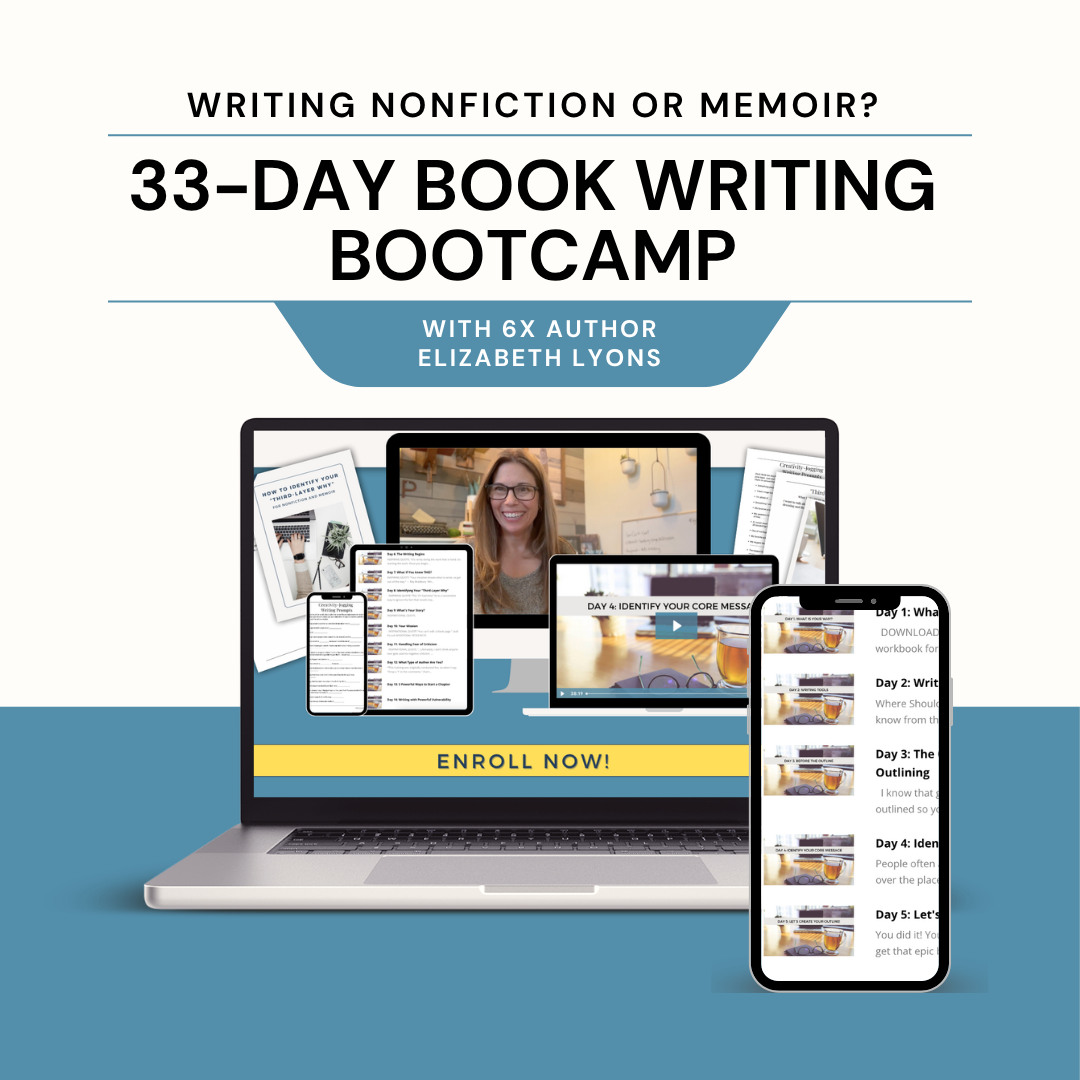
Ready to Write the Damn Book Already?
Get the first draft of your nonfiction or memoir written in 33 days!
...even if you don't have a cabin in the wilderness, 4 uninterrupted hours a day to write, or confidence that you're a "real" writer.

Amazon Ads for Indie Authors!
Learn how to run Amazon ads that actually work—even if you’ve never touched an ad platform in your life.

Want all my best author email templates?
From communicating with your launch team to building long-term relationships with readers, these templates take all the guesswork out of writing emails that turn email subscribers into loyal readers!

Need Coaching, Accountability & Community?
The Book Writers Collective provides the coaching, support, and writers' community you need to bring your book to life!

SELF-PUBLISHING STARTER KIT
Discover the exact steps to focus on (and mistakes to avoid) so you can self-publish an incredible book that's indistinguishable in quality from a New York Times bestseller.
Recent Posts
