
Ep 182: What a Real Writing Career Looks Like, According to Laurie Notaro
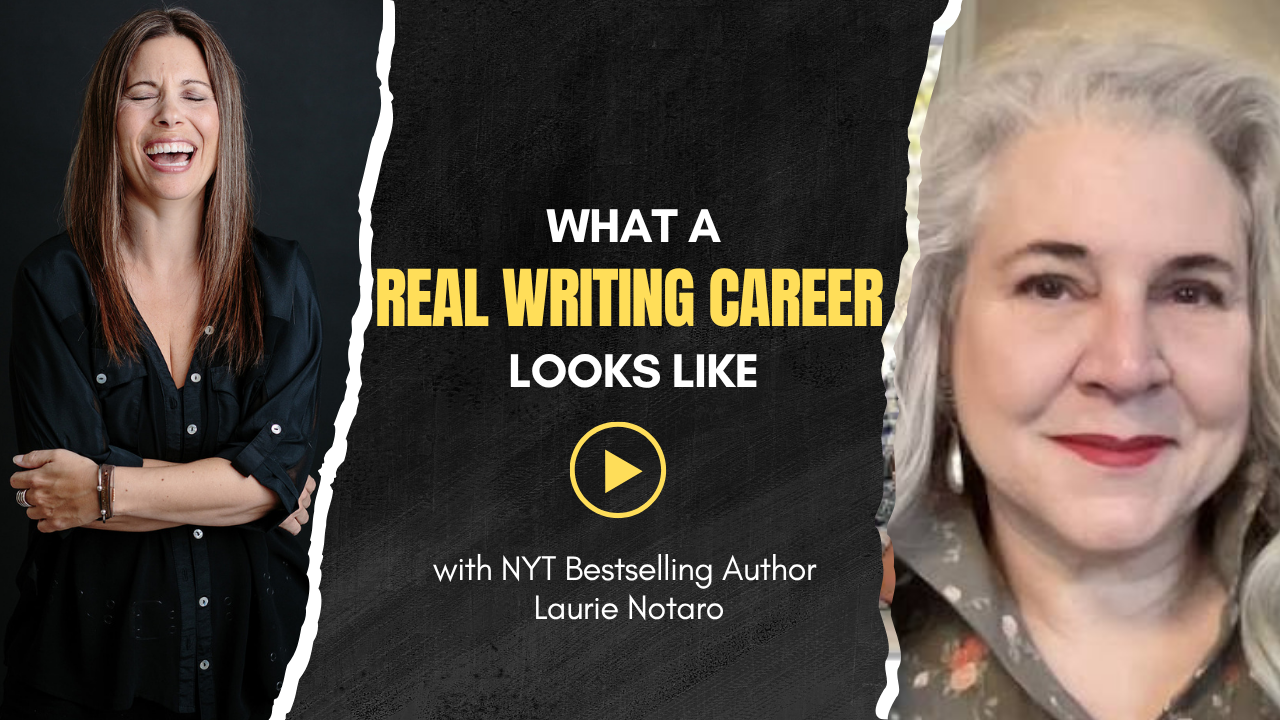
Laurie Notaro has landed on the New York Times bestseller list something like eight times. (She isn't sure of the exact number.) She's also not sure how many books she's written, which I found so delightful I nearly came out of my chair. She drives a 2008 Mini Cooper, lives in a 1,500 square foot house, and has earned out on exactly one book.
Laurie came on the podcast to talk about I've Got a New Complaint, her new essay collection out September 8 from Little A, with a title borrowed from a Nirvana lyric. We did talk about it. We also talked about getting fired, getting dropped by her agent over email, and being told no by nearly everyone for thirty years.
The math on a writing career is not what anyone tells you There's a story floating around out there where you land the book deal and then you're set. Royalties roll in. You buy a house with a library in it. You become insufferable at parties. Laurie's response to that: "Hardly anyone ever earns out." She said it plainly, as someone who has been on the list repeatedly and still describes her whole adult life as living book to book instead of paycheck to paycheck.
There were nights, she told me, spent at three in the morning crying in the bathroom so her husband wouldn't hear, doing the math on the mortgage. That's a New York Times bestselling author. I'm not telling you this to frighten you, I'm telling you because I think expectations are the thing that break most first-time authors, not the writing.
If you go in believing one book will change your financial life, the actual result will feel like failure even when it's a success.
How Laurie Notaro writes an essay
This was the part I most wanted, and it's the most immediately useful thing in the episode if you're working on a memoir or an essay collection right now. Laurie doesn't sit down and write a finished piece. She rehearses. Her husband pointed this out to her before she'd noticed it herself.
Something absurd happens, she comes home and tells him, then she tells her mother, then she tells her sister. By the fourth telling she's learned where the pause goes and where the laugh lands. She's editing out loud, in public, before a word gets typed. Then she takes notes so she doesn't lose the details, because she says her memory is terrible. Bank statements, the back of a checkbook, whatever is in the purse. And then there's the structural piece she says took her about thirty years to figure out, which she now teaches. If you take one craft note out of this episode, take this one.
Her first book was self-published after seven years of "No"
The Idiot Girls' Action-Adventure Club went out for seven years. Nobody wanted it. Laurie was told she was too bitter and too angry for a girl, which is a sentence I'd like to have framed. So she published it herself.
Then Random House came calling, and she had to buy her way out of her own self-publishing setup to take the deal. She's self-published three books over her career. Two of them were old newspaper columns her sister and grandmother had saved, which she typed up, bundled, and put on Amazon during a stretch when she had no income coming in. She'll tell you the copy editing is terrible. It also got her through a year.
This is one of the reasons I get so tired of the self-publishing versus traditional publishing argument being framed as a moral question. It's a strategy question, and the answer changes depending on the book and the year and what you need that book to do for you.
What it actually looks like when a publishing career falls apart
This happened to Laurie. Twice. The first time, Random House declined to renew her contract after roughly a decade with them. She thought she had a home there permanently. She did not. The second time was worse. Crossing the Horizon came out two weeks before an election, when the entire book industry went quiet. It sold three thousand copies. She got the best reviews of her life for that book, and it didn't matter.
While she was on tour for it, the agent who had represented her since her first book dropped her. Over email. She lost the contract for her next book and spent the following three years living on credit cards, still paying interest on that debt years later.
She got a communications job at a university. Then Stanford. Then she was laid off from Stanford at sixty when the grant funding got cut (thanks, Doge). Her next book, by the way, is a novel about five women who lose their jobs and turn to crime to bridge the gap until Social Security kicks in. It goes horribly wrong for them (of course).
I share this because I talk with authors all the time who assume that anyone with a traditional deal has arrived somewhere permanent. Nobody has arrived anywhere. The tide comes in and out for everybody.
"Nobody wants to read about middle-aged women"
Laurie heard that from agents and publishers alike when she was trying to get back into the game. She heard it about the book that became Excuse Me While I Disappear, which went on to do so well it kept her at Little A. Middle-aged women are the largest book-buying demographic in the country. They are the people reading and purchasing and recommending and gifting. And they were being told, by the industry that depends on them, that they were not an audience.
I had almost the identical experience with my first book. I pitched it and pitched it, and I kept hearing the market wasn't big enough. It was a book about the first year with twins. A hundred thousand sets of twins are born in this country every year and those parents don't buy one book, they buy all of them. I published it myself and it sold around 40,000 copies over eighteen years. I'm not telling you that number so you'll expect it. Please don't expect it! I'm telling you because "the market isn't big enough" often means "I personally don't see it," and those are very different statements.
Why she left the Big Five
Amazon went to the top agents in the industry and asked a simple question: Are your clients happy? The answer, broadly, was no. Laurie's assessment after several years with them is that she gets paid on time, they're truthful with her, and the marketing operation is genuinely good.
Her book landed in First Reads, which lets Prime members download it free for a full month before release. That's an enormous number of readers before the on-sale date. She's blunt that returning to a traditional house would take a lot at this point.
We can each have whatever feelings we have about Amazon. What Laurie pointed out is that a lot of working writers who had lost their deals and their careers got put back to work thanks to a book deal with an Amazon imprint.
The lesson underneath it isn't really about Amazon. It's about her other line, which is the one I'd write on a Post-it Note: "Never go with a publisher who isn't excited about your book, because if they aren't going to bat for it, your book is just lost."
Why one-star reviews might be your best marketing
Laurie collects hers. She posts them on Facebook. She's proud of them. One reviewer said she deeply regretted choosing I've Got a New Complaint as her free book and then deleted it off her Kindle.
When Laurie looked at that reviewer's other reviews, she found that she had also given one star to corn nuts, on the grounds that corn nuts are not nuts; they are dried corn.
The reframe I want every first-time author to steal: A one-star review that says "this was too raw" or "I can't believe how they talk to each other" is not a failure. It's a signal flare to exactly the right reader. If you go looking for it, that reader will tell you what your book actually is, and sometimes she does it more clearly than a five-star review ever could.
The reviews that should worry you (especially as a self-published author) are the ones about excessive typos and formatting issues. Those are fixable, and they're on you.
So what do you do with all of this
If you're mid-manuscript right now and this whole post made your stomach drop, I understand. But look at what's actually in it: a woman got told no for seven years and published the book herself. Her career collapsed twice and she rebuilt it twice. She got dropped, laid off, and told her audience didn't exist, and she has somewhere around two dozen books out and another one coming.
She keeps going because the ideas keep showing up. That's it. She said she'll be lying in bed and a title arrives and she thinks, "Well, damn it, now I have to write it." Timing and luck are real and neither one is under your control. What is under your control is finishing the damn thing, understanding the business you're walking into, and not quitting the first time somebody tells you the market isn't big enough.
CONNECT WITH LAURIE NOTARO
Website: www.laurienotaro.com
Instagram: @laurienotaro
Want to Stay in the Know?
Sign up to receive the latest book industry news and updates!
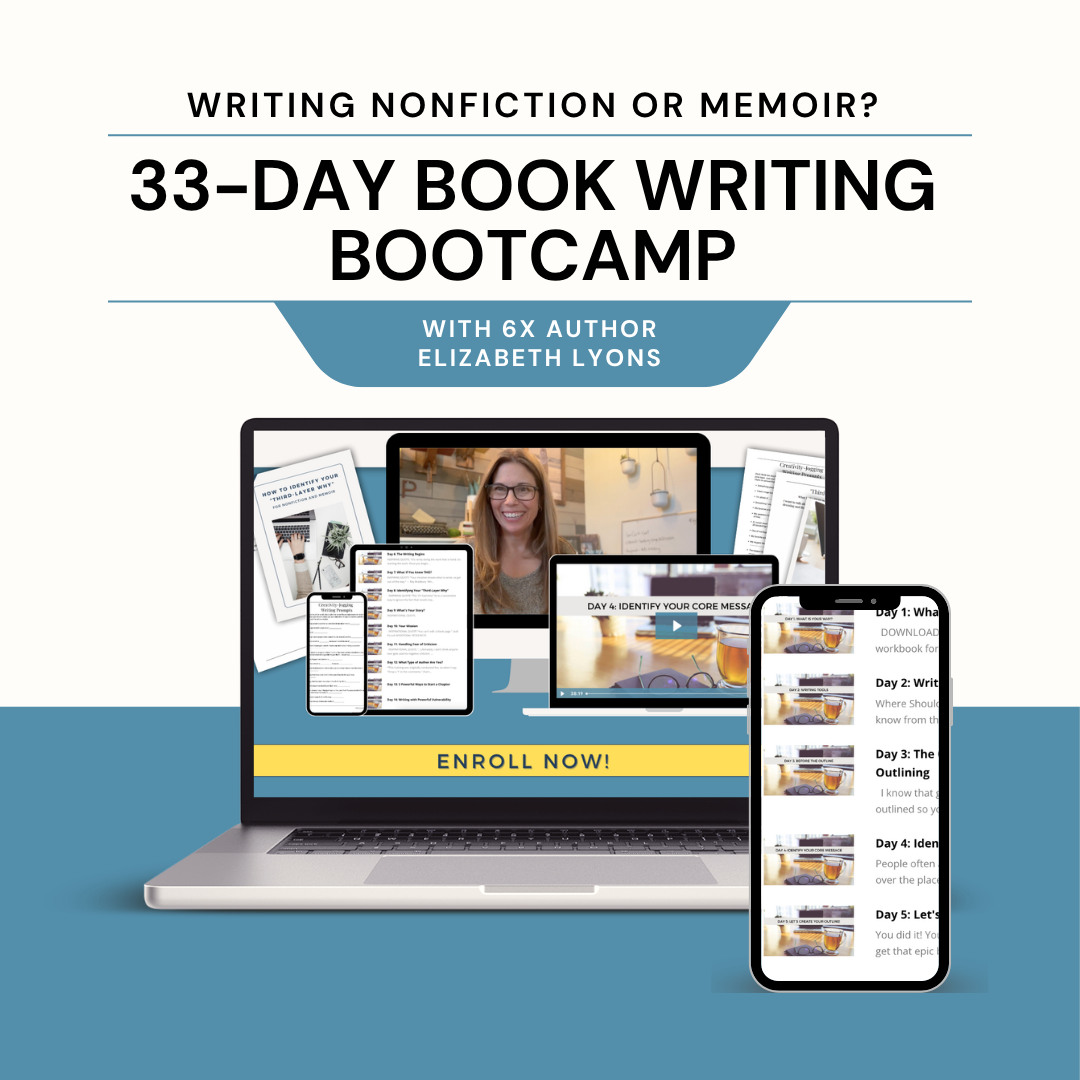
Ready to Write the Damn Book Already?
Get the first draft of your nonfiction or memoir written in 33 days!
...even if you don't have a cabin in the wilderness, 4 uninterrupted hours a day to write, or confidence that you're a "real" writer.

Amazon Ads for Indie Authors!
Learn how to run Amazon ads that actually work—even if you’ve never touched an ad platform in your life.

Want all my best author email templates?
From communicating with your launch team to building long-term relationships with readers, these templates take all the guesswork out of writing emails that turn email subscribers into loyal readers!

Need Coaching, Accountability & Community?
The Book Writers Collective provides the coaching, support, and writers' community you need to bring your book to life!

SELF-PUBLISHING STARTER KIT
Discover the exact steps to focus on (and mistakes to avoid) so you can self-publish an incredible book that's indistinguishable in quality from a New York Times bestseller.
