
Ep 187: Publicity vs. Marketing vs. Sales: A Former Random House Editor Explains the Difference
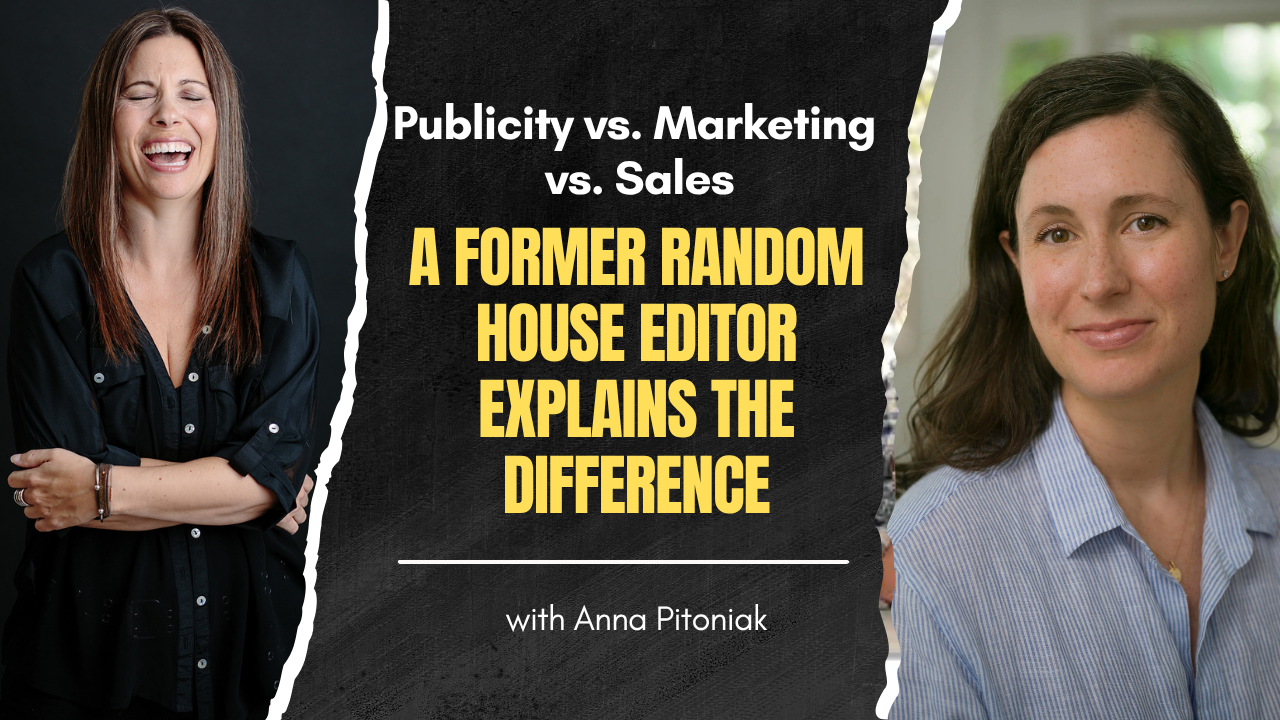
Anna Pitoniak spent years as a senior editor at Random House, wrote her first two novels in the hours before and after work, and has now published five books of her own. Her newest, The Swiss Agent, comes out December 1, 2026 from Simon & Schuster.
It arrived on my doorstep and I got unreasonably excited, because I am fully in my espionage era right now.
It's rare that I get the chance to talk to someone who's sat on both sides of this business at the same time, so I showed up with a slew of questions, starting with the one I've been circling for several episodes now.
What's the Difference Between Publicity, Marketing, and Sales?
Anna's definition: Publicity is earned media, meaning coverage that neither you nor your publisher paid to get: A mention in "People," a review in the New York Times, an NPR interview. A publicist pitches the outlet, the outlet decides the book is of interest to its audience, and no money changes hands.
Marketing, on the other hand, usually involves a paid component. Ads on Meta or Amazon, Goodreads giveaways where the publisher covers the galleys and the shipping, that kind of thing.
Then there's the blurry part. Neither of us knows where influencer and bookstagram outreach really sits. Nobody's writing a check, but the publisher is buying and shipping books, so there's a cost. Anna raised it as an open question and I didn't have a better answer than she did.
Sales is its own separate thing, and it doesn't move in lockstep with either of the other two.
What Book Ads Are Really Doing
Anna's publisher runs ads for her, though she doesn't set them up herself, and the budget is limited, as most budgets are now.
We both landed in the same place on Meta ads for books. Tracking is hard, especially since Amazon doesn't let you see conversions directly, and the margins on a book are thin enough that expecting a clean profit isn't typically reasonable.
It functions more like brand awareness than conversion. That's worth knowing, whether a publisher is running your ads or you're running them yourself, because it changes what success looks like.
Why It's So Hard to Trace What Actually Sold Your Book
Anna had BookScan access when she worked at Random House, which meant she could look up her own sales every week, track them granularly, and compare them against other books. She did exactly that with her first novel and thinks it might have been a mistake. When she left and her corporate login stopped working, she counted it as a sanity saver.
She has an author portal now, and she tries not to check it often. Her reasoning is that connecting cause to effect with book sales is frankly really hard. Sometimes it's obvious, like a Reese's Book Club pick or a huge BookTok shout-out. But more often, it's noise with no clear signal. Even a genuinely big win takes time to show up.
A "People" mention might prompt some people to buy. But then those people need weeks to read the book, more time to love it, and even more time to tell a friend or write a review or pick up your backlist. So the more permission you give yourself to stop worrying about it in the short term, the better off you'll be.
The Question I'm Still Thinking About
Say you're going to sell 100,000 copies of your book. Would you rather sell 90,000 in the first week and then fall off a cliff, or grow steadily over years to the same number?
There's always a part of the ego that wants the spike, and Anna is honest that it's because publishing is such delayed gratification. You spend years on the manuscript, then revising, then finding an agent, then finding a publisher, then revising again. We all want fireworks on release day. But what we usually get is...a regular Tuesday. Other books also come out. Everyone moves on.
After the release of The Futures, her first novel, Anna felt a real comedown. Once she processed it and let it go, what replaced it was gratitude that the book was out in the world. It kept going quietly, earned out, and still pays her royalties twice a year. Not life-changing money, in her words, but enough to cover the oat milk in her coffee.
Why She Stopped Warning Authors Off Fall Publication
As an editor, Anna was always wary of publishing fiction in the fall, because that's when the heavy hitters land. If Jonathan Franzen has a novel coming, it's coming in the fall. She still thinks that's true if your goal is a bestseller list slot, since those are spoken for.
But if the goal is eyeballs on the book and foot traffic in bookstores, the end of the year is strong, starting around Black Friday and running to Christmas Eve. Her sense is that in-store shopping has held up well in that window, partly because of the real goodwill around shopping local.
Amazon does two-day shipping, but at five o'clock on Christmas Eve with no present, you're going to your indie, and indies keep long hours right up to the end. Publishers also started shipping directly to bookstores on a two-day timeline, which has tightened up restocking considerably.
She published The Helsinki Affair in mid-November and liked hearing readers say they could buy it for a parent for Christmas. The Swiss Agent has a wintry cover, but it isn't a Christmas book, so nothing about it goes stale in January.
Why Returning Characters Made the Book Harder
The Swiss Agent took close to three years, which is longer than usual for her. Part of that was a creative problem she didn't anticipate. Normally, plot and character develop together for her, a back and forth where she tries a scenario and sees how the character responds. With this book, the characters already existed from The Helsinki Affair. She knew them completely.
So when she tried to slot them into a plot, the writing felt artificial because she could feel that Kath wouldn't do this and Amanda wouldn't say that. What worked was letting go of the wheel entirely. She wrote a messy draft, let the characters dictate the moves, and ended up somewhere different from what she'd planned but also better than what she'd planned.
She'd assumed recurring characters would make things easier since she wouldn't have to invent anyone. Instead the book asked for a whole other level of surrender.
How an Idea Starts as a Question
Anna's books begin with a question that hovers above the story rather than a plot she can outline. For The Helsinki Affair, it was: What if an ambitious young woman at the CIA found her career complicated by secrets her father kept during his own career there? She didn't know what the conspiracy was or how the daughter would find out. The question created the bones, and the specifics filled in over several drafts.
For The Swiss Agent, the question was about Kath Frost: What made her who she is, and did she ever come close to stepping over the line? Kath's independence makes her exceptional at the job, and it's also the thing that could get her into trouble if she ever decided a mission wasn't worth running.
How She Researches the CIA
Mostly by...reading! It's remarkable how much is publicly available about an organization that secretive, written by people who worked there and by academics who've spent careers studying it. She did spend an afternoon at Langley through a friend of a friend in the press office.
The agency has someone whose job is meeting with novelists and screenwriters to help them get it right. She got a tour, a small museum, a few meetings, and several polite refusals to answer her questions. What she got out of it was the feel of the place.
Since publishing these books, she's also heard from readers in the intelligence community, including retired CIA officers who've told her what the work was actually like. What she values most is the ordinary detail, because the thing you hear over and over about the CIA is that it's a bureaucracy.
Yes, there are gun battles and car chases, and you need those on the page. But there's also a great deal of interpersonal conflict and ego, which is what makes it human and relatable. Most of us don't know what it's like to be a spy. Most of us do know what it's like to work somewhere big and feel unheard.
I told her I wanted to be a CIA operative at twenty and gave it up because someone told me, with total authority, that a birthmark would disqualify me. It didn't ever occur to me that birthmarks can be removed! It's amazing what you'll believe at twenty!
CONNECT WITH ANNA PITONIAK
Website: www.annapitoniak.com
Instagram: @annapitoniak
Substack: annapitoniak.substack.com
Want to Stay in the Know?
Sign up to receive the latest book industry news and updates!
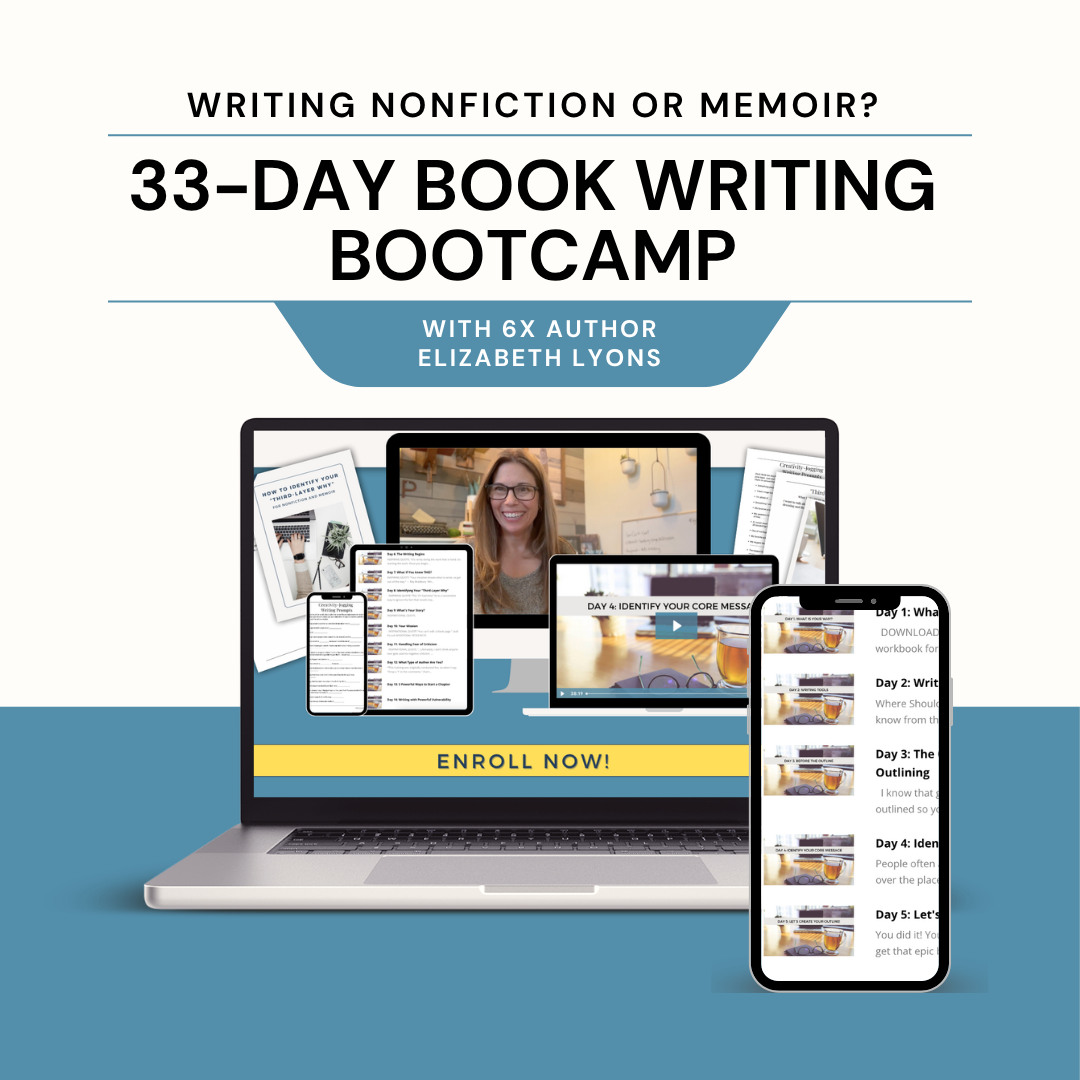
Ready to Write the Damn Book Already?
Get the first draft of your nonfiction or memoir written in 33 days!
...even if you don't have a cabin in the wilderness, 4 uninterrupted hours a day to write, or confidence that you're a "real" writer.

Amazon Ads for Indie Authors!
Learn how to run Amazon ads that actually work—even if you’ve never touched an ad platform in your life.

Want all my best author email templates?
From communicating with your launch team to building long-term relationships with readers, these templates take all the guesswork out of writing emails that turn email subscribers into loyal readers!

Need Coaching, Accountability & Community?
The Book Writers Collective provides the coaching, support, and writers' community you need to bring your book to life!

SELF-PUBLISHING STARTER KIT
Discover the exact steps to focus on (and mistakes to avoid) so you can self-publish an incredible book that's indistinguishable in quality from a New York Times bestseller.
